How to Create a Cozy Indoor Plant Corner Even in Small Home
Table of Contents
You don’t need a big house or a sprawling balcony to enjoy greenery at home. A small indoor plant corner can completely change how a room feels, turning even the tiniest apartment into a space that actually breathes.
I’ve seen people work magic with nothing more than an awkward corner and a few well-chosen plants. The trick isn’t having more space—it’s knowing how to use what you’ve got. And honestly? Sometimes the smallest setups end up being the most charming. Want to make your home feel more comfortable? You’ll love our tips on Best Laminate Flooring Options for Families.
Pick Your Spot (Light Matters More Than You Think)
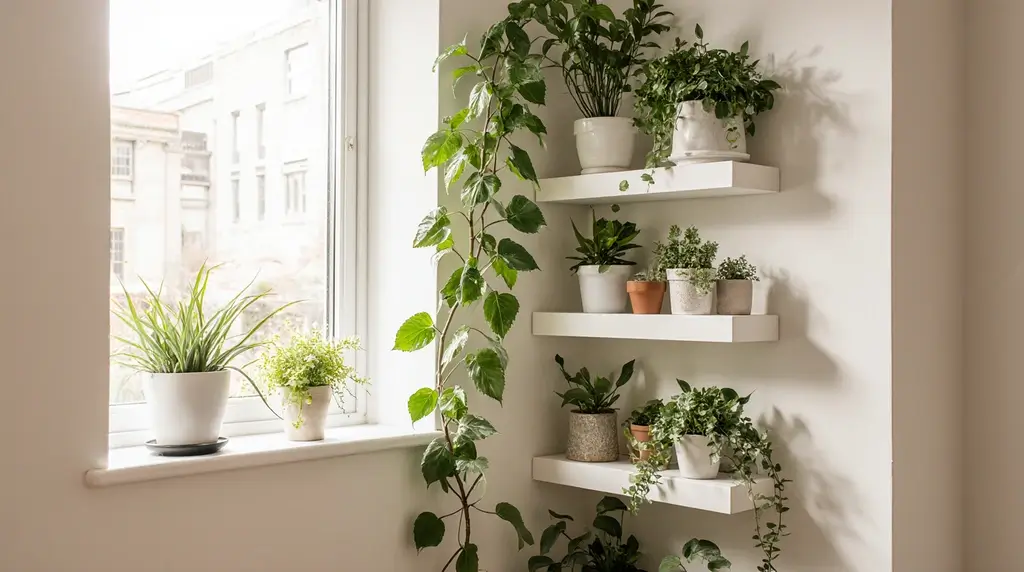
Before you rush out to buy plants, spend a few days watching how light moves through your home. This might sound tedious, but it saves you from killing plants later.
South-facing corners get the most sun, which works great if you’re planning on keeping cacti or succulents. East-facing spots get that gentle morning light—perfect for most common houseplants. North-facing areas stay softer and shadier, better suited for ferns or pothos that don’t need much.
Look beyond the obvious corners too. That weird space next to your bookshelf? Could work. The gap between two windows? Actually ideal. Even small bathrooms with a window can be perfect because of the humidity.
One thing people forget: you need to actually reach your plants to water them. Don’t shove them somewhere so awkward that caring for them becomes a hassle. If there’s a sink nearby or an outlet for a grow light, even better.
Choose Plants That Won’t Outgrow the Space
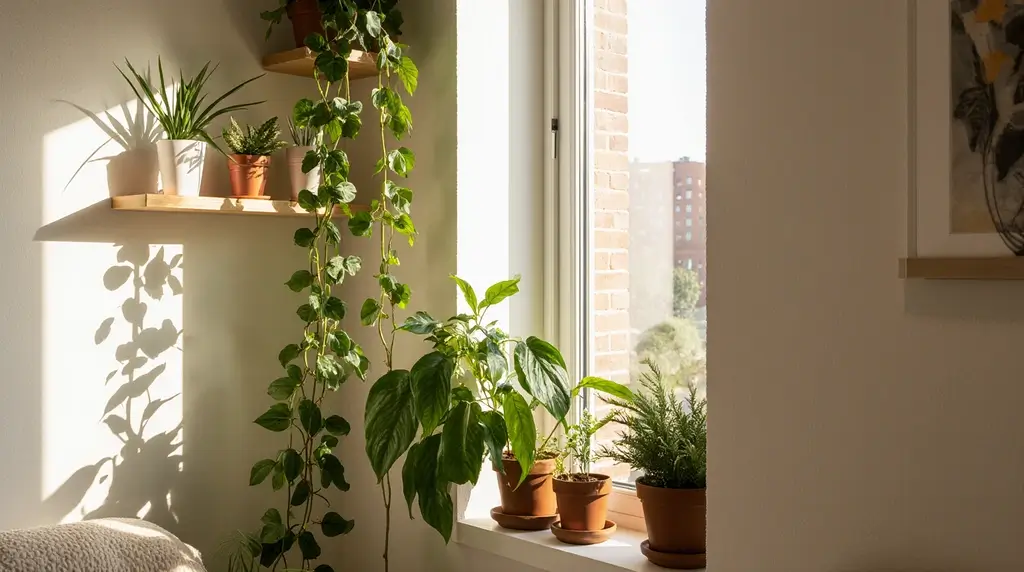
Not every plant belongs in a small home. Some grow fast and wide, taking over before you know it. Stick with varieties that stay manageable and don’t need constant fussing.
Easy wins for beginners:
- Pothos – Nearly impossible to kill, trails beautifully, forgives you for forgetting to water
- Snake plants – Grow up instead of out, handle low light, need watering maybe twice a month
- ZZ plants – Glossy leaves, tolerates neglect, looks expensive but isn’t
- Chinese evergreens – Come in pretty patterns, stay compact, very forgiving
If you want something a bit more interesting, peace lilies give you actual flowers occasionally. Parlor palms add that tropical vibe without taking over your entire room.
Mix different shapes and sizes. Put a taller plant in back, some medium ones around it, then smaller trailing types in front or hanging down. This layering makes even three or four plants look like a full corner rather than a random collection.
Think about textures too. Pair something with smooth leaves next to something fuzzy or textured. Mix solid greens with variegated patterns. It keeps things interesting without feeling cluttered.
Use Vertical Space (Because Floor Space Is Precious)

When you’re tight on square footage, the answer is simple: go up.
Corner plant stands are made specifically for this. They fit snugly into that 90-degree angle and give you multiple levels without eating up much floor space. You can find them in wood, metal, whatever matches your style. The tiered effect makes your ceiling look higher while fitting way more plants than you’d think possible. For long-term organization ideas, explore our collection of Home Office Designs Hacks for Small Spaces.
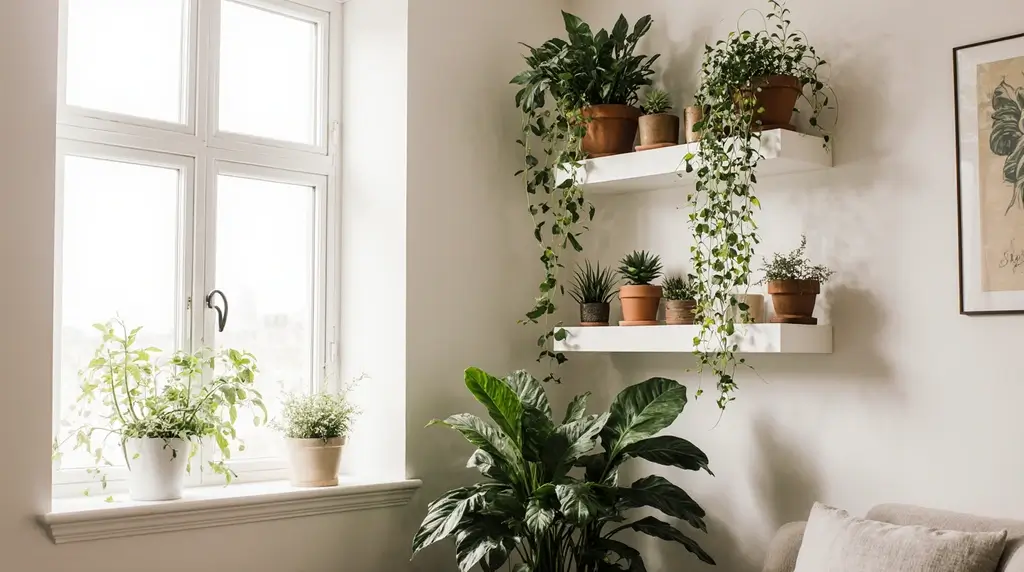
Floating shelves work wonders too. Stagger them at different heights and depths. Put heavier plants on the lower, sturdier shelves. Let trailing plants hang from the higher ones so they cascade down naturally.
Hanging planters are probably the most underused tool for small spaces. Those macramé hangers everyone’s grandmother had? They’re back, and they actually look good now. Install a few ceiling hooks and suddenly you’ve got plants at eye level or above, using space that was doing nothing before.
Some trailing plants—pothos, philodendrons, string of hearts—will grow long enough to create an almost curtain-like effect. It’s surprisingly cozy.
If you really want to get creative, wall-mounted planters or vertical garden panels let you build upward even more. Great for herbs in the kitchen or small succulents in the living room.
Style It So It Feels Intentional
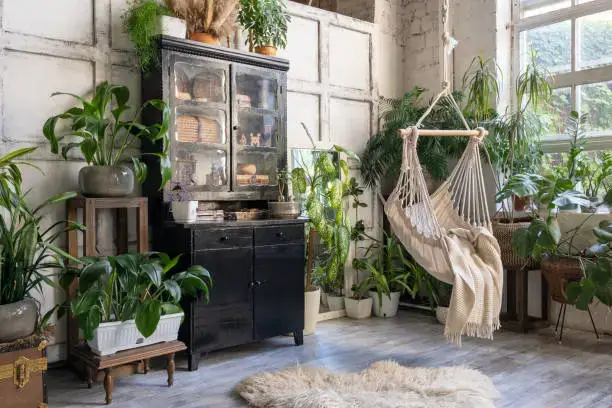
Throwing plants in a corner doesn’t automatically make it look good. A little styling goes a long way.
Start with height variation. Tallest plant in back or in the actual corner. Medium-sized ones in the middle. Small or trailing types in front and on the sides. This graduated setup means you can see every plant instead of having some hidden behind others.
Add some personality with:
- Woven baskets or ceramic pots in earth tones
- Mix-and-match pot styles (looks collected, not matchy-matchy)
- Wooden stands or natural materials
- Small decorative items like stones or a tiny watering can
Lighting helps both the plants and the mood. If natural light is lacking, grab a grow light—modern ones actually look decent and double as regular lamps. For evenings, string lights or a small table lamp make the corner feel warm and inviting instead of just functional.
Here’s something most people skip: leave some breathing room. You don’t need to pack every inch with plants. A bit of empty space actually makes the whole thing look more intentional and less like a cluttered mess.
Keep Them Alive (It’s Easier Than You Think)
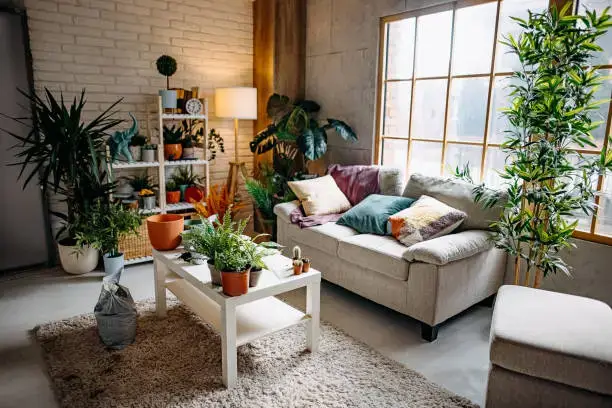
Houseplants aren’t as finicky as their reputation suggests. Most problems come from overthinking it.
Watering is where most people go wrong. Stick your finger about an inch into the soil. Dry? Water it. Still moist? Leave it alone. More plants die from too much water than too little, so when in doubt, wait another day.
Most houseplants appreciate some humidity since they’re originally from tropical places. If your home is dry (especially in winter), mist them a few times a week or put a small humidifier nearby. Or just set pots on a tray of pebbles with water—as it evaporates, it creates moisture around the plants.
Rotate your plants every week or two so they grow evenly. They naturally lean toward the light, so turning them keeps them balanced instead of lopsided.
Feed them during spring and summer with diluted liquid fertilizer every few weeks. Cut back in fall and winter when they’re not actively growing. It’s pretty forgiving—under-feeding is way safer than over-feeding.
Wipe the leaves down with a damp cloth once a month. Dust blocks light and attracts pests. While you’re at it, check for bugs like spider mites or mealybugs. Catch them early and they’re easy to deal with.
Don’t be afraid to prune. Trim off dead or yellowing leaves. Cut back leggy growth to encourage bushier plants. Most of those cuttings can actually be rooted in water to make new plants, which is a nice bonus.
Why It’s Worth the Effort
There’s something about having living things around that just changes a space. Research backs this up—plants reduce stress, clean the air a bit, and generally make people feel better. For a healthier indoor space, explore our guide on Indoor Air Quality: Simple Upgrades for a Healthier Home.
Even in a studio apartment, a small plant corner gives you a focal point. Something that changes and grows. A reason to slow down for a minute and check on something other than your phone.
You don’t need to start big. Grab two or three easy plants, put them in your chosen spot, and see what happens. As you figure out what works in your space, you can always add more.
That empty corner you’ve been ignoring? It could be the calmest spot in your home. Worth a shot, right?
Where is the best place to set up a plant corner in a small space?
Look for an unused corner near a window or a spot that gets indirect natural light. Even areas beside a sofa or next to a bookshelf can work well. The goal is to use vertical or overlooked space without crowding the room.