Best Backyard Water Feature Ideas: Ponds and Mini Fountains
Table of Contents
There’s something almost magical about walking into your backyard and hearing water trickling over stones instead of cars honking down the street. That shift alone can change how you feel about spending time outdoors.
Water features don’t have to mean hiring a landscape architect and draining your savings account. Sure, a professionally installed koi pond looks incredible, but plenty of homeowners are creating beautiful, calming water elements on surprisingly modest budgets. Really, a water feature is just any setup that introduces water into your yard—could be a simple fountain on your deck or a full pond with a waterfall. Most readers who enjoyed this guide also loved Front Yard Landscaping Ideas to Boost Your Home’s Curb now — don’t miss it!
What to Consider Before You Start
Getting this right means thinking through a few practical details upfront. Your space, what you actually like looking at, how much you want to spend, and honestly, how much maintenance you’re willing to do.
Space and Where to Put It
A tiny courtyard calls for a different approach than a half-acre lot. If you’ve got a small patio or balcony, you’re probably looking at something like a container pond or tabletop fountain. Nothing wrong with that—they still give you that water element without needing much room.
Where you place it matters more than you’d think. Shade or partial shade helps with evaporation, which isn’t just about saving water. Too much evaporation can damage your pump and create algae problems.
Think about sound, too. A water feature tucked into a corner where the sound bounces back will feel more present than one sitting out in the open. And here’s the obvious one that people sometimes forget: pumps need electricity. Make sure there’s an outlet within reasonable reach.
What It’ll Cost You
The price range is all over the map. Professional fountain installations typically start around $900 and can easily top $5,000. Building a pond runs about $3,400 on average. Want to add a fountain to that pond? Tack on another $450 to $1,000.
DIY changes the math completely. You can build something like a water wall for $250 to $300 in materials—something that would cost over a thousand if you hired it out. The catch is your time and willingness to figure things out as you go.
The Maintenance Reality
This is where people often get surprised. Smaller features without ponds—things like birdbaths, self-contained fountains, bubbling rocks—need way less upkeep. You’re mostly just topping off water and cleaning them occasionally.
Ponds are a different story. Especially if you add fish. You’re committing to regular cleaning, water testing, algae control. It’s not overwhelming, but it’s steady.
One thing that applies across the board: keep the water moving. Mosquitoes won’t breed in circulating water. For anything with standing water, like decorative bowls, change it out every 10 days or so if you see larvae.
DIY Ideas That Actually Work
Most DIY water features follow the same basic principle—you’re taking a submersible pump and finding interesting ways to move water around. The pump does the heavy lifting. Your creativity makes it look good.
Start Simple
A fountain in a pot is about as straightforward as it gets. Buy a pump, stick it in an attractive container, done. The whole project turns on finding a pot you really like.
Mini water gardens work well for apartment balconies. Just a container, some water, and a few aquatic plants. No pump needed.
Bamboo fountains give you that Japanese garden vibe without much effort. Hollow bamboo sections become your water channels, and the look is instantly serene.
Medium Difficulty
A pot fountain using two stacked planters takes a bit more planning but still uses basic materials. Again, choose nice pottery and you’re halfway there.
An upcycled water wall requires actual building—creating a wooden frame that makes water look like it’s flowing down glass. This one’s a weekend project, not an afternoon.
A wheelbarrow waterfall brings farmhouse charm if that’s your style. Looks harder than it is.
The floating water jug illusion—where containers seem to defy gravity, pouring into each other mid-air—gets a lot of attention. It’s manageable if you can follow good instructions.
For the Ambitious
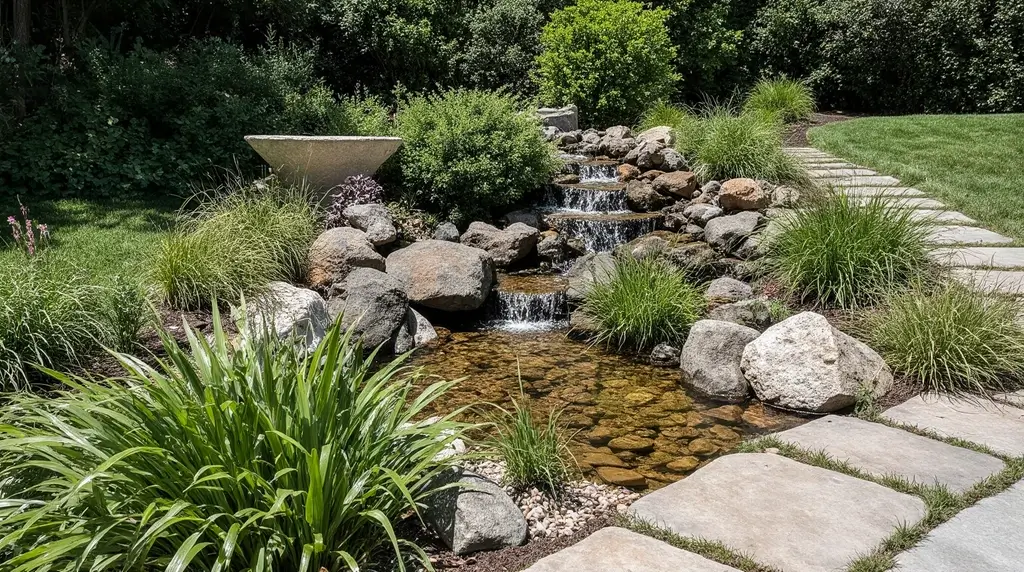
A river rock fountain that seems to emerge from your landscaping requires digging and careful planning. But the effect is sophisticated—water appears and disappears naturally, blending completely into the surroundings.
Professional Installations Worth Considering
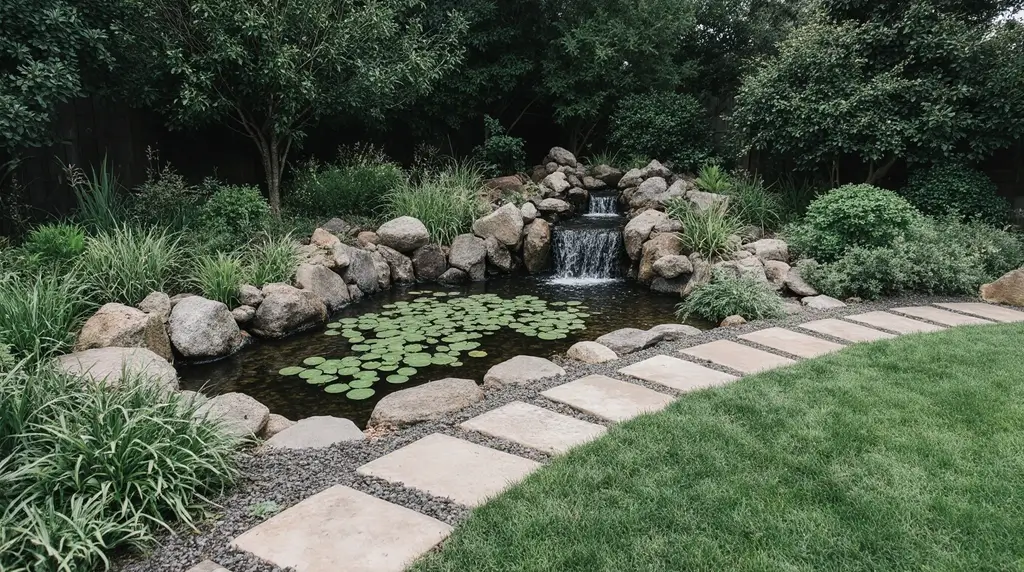
Some projects just make more sense to hire out. Anything involving major excavation, grading land, or dealing with utility lines falls into that category. while busy lifestyles require low-maintenance designs that don’t sacrifice beauty for practicality.
Waterfalls and Ponds
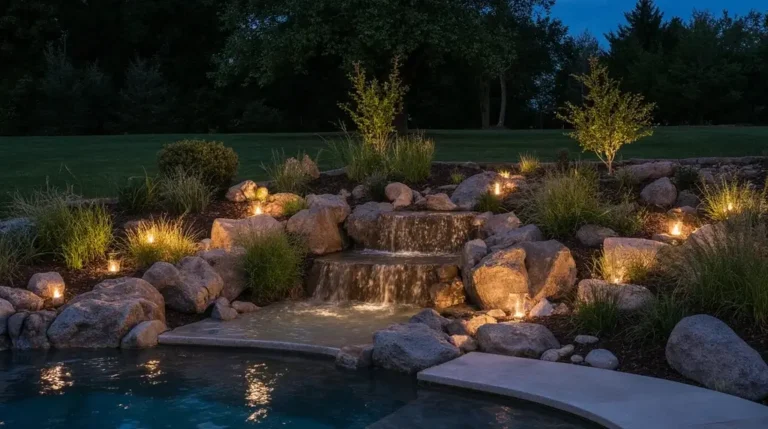
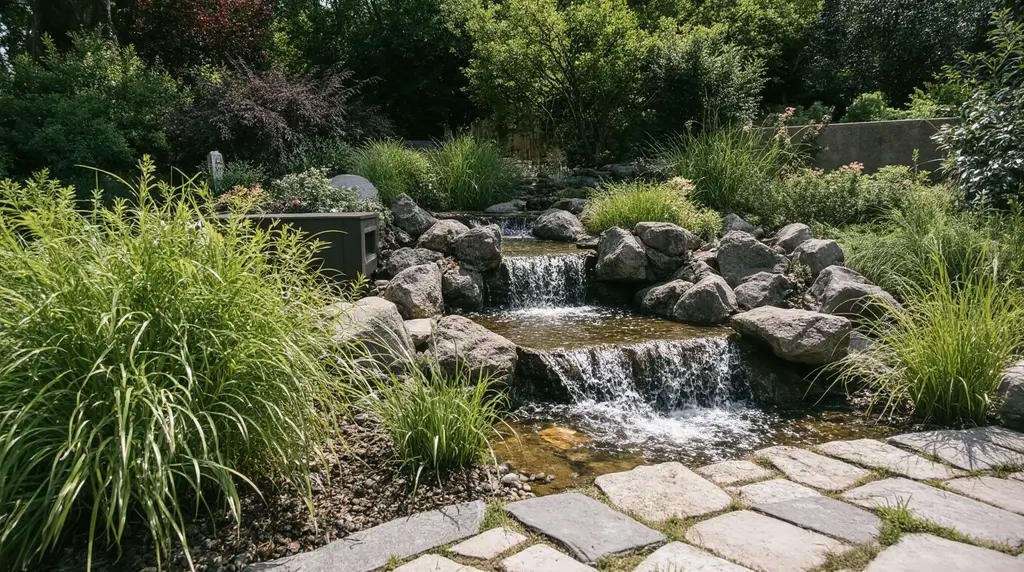
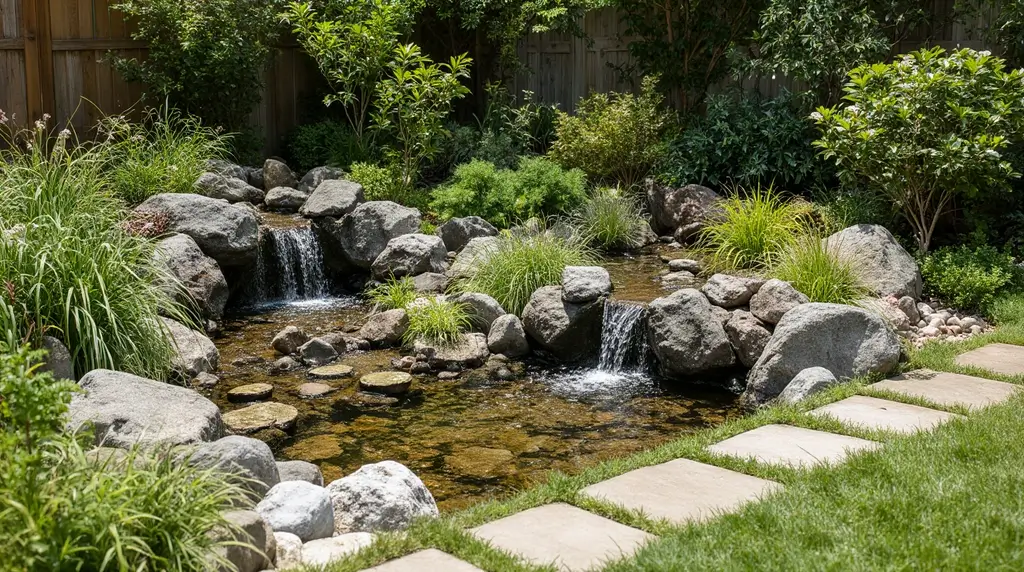
The classic pond with a waterfall running into it creates that quintessential backyard water feature sound. If you want the waterfall without pond maintenance, a pondless version gives you the look and sound but lets the water disappear into a hidden reservoir. Less upkeep, and safer if you’ve got small kids around.
Standalone waterfalls don’t need ponds at all. The water recirculates from a hidden catch basin, and you get all the visual drama with minimal space requirements.
Add fish to a pond and you’re creating a whole little ecosystem. It’s more work, but watching koi glide around has a genuinely calming effect.
Built-In Features
Some people integrate waterfalls into their swimming pools. The pool pump does double duty, creating a water feature that’s also a splash zone. Just make sure your deck can handle the extra weight of rocks.
Hot tub waterfalls combine two luxury features in one spot.
Water walls—those large vertical panels where water sheets down glass, stone, or metal—create serious visual impact. They add depth and an almost architectural quality to a space.
A waterfall privacy screen solves two problems at once: blocking an ugly view while drowning out noise from neighbors or the street.
Style Approaches
Lighting changes everything at night. Spotlights or solar-powered waterproof fixtures can turn your water feature into evening entertainment, highlighting movement and creating shadows.
Positioning a pond next to a patio or seating area just makes sense. You’re more likely to actually sit out there and enjoy it.
Go tropical with palms and succulents around a waterfall, or create a forest vibe with moss and ferns. The plants you choose completely change the feel.
Classic stone or ceramic fountains fit perfectly in formal gardens—English cottage style, Mediterranean courtyards, that sort of thing. They read as timeless and add noticeable curb appeal.
Bird-friendly setups with shallow fountains and native flowers attract wildlife. You’ll get birds, butterflies, bees. It’s good for the local ecosystem and entertaining to watch.
Why Bother With a Water Feature?
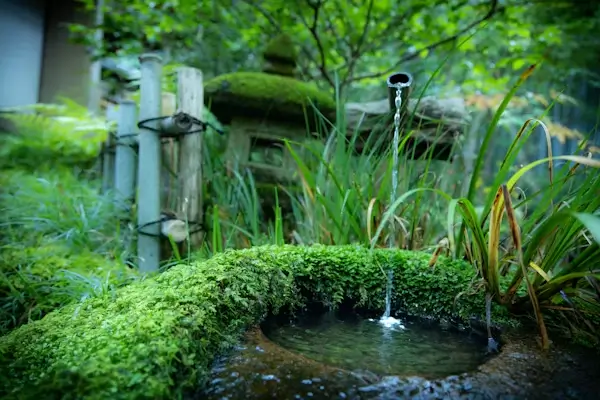
Beyond looking nice, these things actually do something for you.
The sound of moving water genuinely helps with stress. It’s not just aesthetic—there’s something about that white noise quality that helps your brain relax. A lot of people end up spending more time outside once they add one.
Visually, water adds movement and interest in a way that static landscaping elements can’t match. It becomes a natural focal point.
Wildlife benefit from water sources. Birds need to drink. Pollinators appreciate accessible water. If you have a pond, frogs and fish might move in. You’re creating habitat.
Property value is harder to quantify, but a well-done water feature can set your home apart when you’re selling. Buyers notice these things.
DIY or Hire Someone?
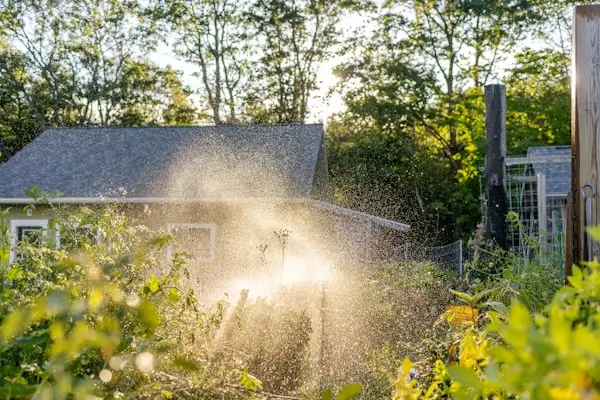
DIY saves money and gives you creative control. Professional installation guarantees it’ll work properly and last.
When to Call a Pro
Major earthwork, complicated plumbing, anything involving grading or drainage—these situations call for someone with experience and proper equipment.
Climate matters more than people realize. In areas with hard freeze-thaw cycles, material choice becomes critical. Granite and basalt hold up. Sandstone and limestone can crack and fail. Local pros know this stuff.
Proper drainage, filtration, and pump sizing make the difference between a feature that works and one that becomes a maintenance headache. Professionals get this right the first time.
Seasonal Care
Spring means cleaning out winter debris, checking for damage, getting your pump and filters running again. Top off the water, add any treatments you use.
Summer is all about evaporation. Check levels regularly. Pull out leaves and sticks before they break down. Use algaecide if you need it.
Fall requires a thorough cleaning before things shut down. Remove debris, trim plants, cut back on fish food as temperatures drop.
Winter in cold climates means draining everything and storing pumps indoors unless you’ve got equipment specifically designed to run year-round.
Common Questions
What’s the real difference between a pond and a pondless waterfall?
Maintenance. Pondless features are dramatically easier to care for. No ecosystem to manage, no deep cleaning, no fish to worry about. You get the waterfall experience without the pond commitment.
How do you stop mosquitoes?
Keep water moving. Mosquitoes need still water to breed. A pump handles this. Make sure you’ve got proper circulation and filtration. Small containers without pumps should get fresh water every 10 days.
Do you need permits?
Depends on where you live and what you’re building. Check with your local building department before starting anything major. Better to know upfront.
Where should you put a water feature?
Shade or partial shade works best—reduces evaporation, protects the pump. Put it somewhere you’ll actually see and hear it. Near a patio, visible from a kitchen window, places you use regularly.
Final Thoughts
Adding water to your landscape changes the space in a way few other elements can. Whether it’s a simple container garden on your balcony or an elaborate waterfall in your backyard, you’re creating something that rewards you every time you experience it. Explore more from our Garden Design & Landscaping category, starting with Backyard Makeover Ideas: From Ordinary to Stunning.
Water has always drawn people in. That hasn’t changed. The difference now is how accessible these features have become—you don’t need a massive budget or a huge yard to bring that element into your life.
Start where it makes sense for your situation. Even a small fountain shifts the atmosphere. The rest you can figure out as you go.
Do water features require a lot of maintenance?
Maintenance depends on the type and size of the feature. Small fountains usually need occasional cleaning and water refills, while ponds may require seasonal care like removing debris. Choosing simple designs and using filters can greatly reduce upkeep.