Indoor Air Quality: Simple Upgrades for a Healthier Home
Table of Contents
Why the Air Inside Your Home Matters More Than You Think
Here’s something most people don’t realize: we spend about 90% of our time indoors. That might not sound alarming until you learn that the air inside your home can be anywhere from 2 to 5 times more polluted than outdoor air. Sometimes it’s even 100 times worse.
And we’re not just talking about a stuffy feeling or a bit of dust. Poor indoor air quality has real consequences—respiratory problems, heart issues, trouble concentrating, even difficulty sleeping. These aren’t minor annoyances. They affect how you feel every single day.
This guide pulls from recent lab testing by CNET and Live Science, along with data from the EPA and Energy Vanguard, to help you understand what’s actually polluting your home Improvement and which air purifiers can make a genuine difference. Before starting any makeover, take a look at our home upgrade checklist Smart Home Upgrades for Energy Efficiency.
The Six Pollutants Doing the Most Damage
Research shows something pretty striking: 99% of the long-term health harm from indoor air pollution comes from just six substances. Scientists rank these using metrics like Disability-Adjusted Life Years (DALY), which essentially measures how much damage each pollutant does over time.
What You’re Actually Breathing
PM2.5 (Fine Particulate Matter)
These tiny particles cause the most harm overall. At 2.5 micrometers or smaller, they’re small enough to get deep into your lungs and even enter your bloodstream. You’re creating them every time you cook, especially if you’re searing meat or stir-frying. Fireplaces and any kind of smoke make things worse.
PM10-2.5 (Coarse Particulate Matter)
Think of this as the slightly bigger stuff—dust, pollen, mold spores. Still small enough to irritate your airways and trigger allergies, but not quite as dangerous as PM2.5.
Nitrogen Dioxide (NO2)
If you cook with gas, you’re dealing with this one. Gas stoves and ovens produce nitrogen dioxide, and without proper ventilation, it builds up fast. Opening a window or running your range hood actually matters here.
Formaldehyde
That new furniture smell? Often it’s formaldehyde off-gassing from pressed wood, cabinets, or even your flooring. It keeps releasing for months, sometimes years. Higher humidity makes it worse, which is why basements can be particularly problematic.
Radon
This one’s invisible, odorless, and radioactive. It’s the second leading cause of lung cancer after smoking. Radon seeps up through cracks in your foundation, so basements and ground floors usually have the highest concentrations. Testing is the only way to know if you have a problem.
Ozone
Ozone can drift in from outside, particularly on hot, smoggy days. Some air purifiers also generate it, which is exactly why you should avoid any machine that claims to “ionize” or “produce ozone.” You don’t want this stuff in your home.
How Air Purifiers Actually Work
Not all filters do the same thing. Understanding the basics helps you choose the right one.
HEPA Filters: The Workhorse
True HEPA filters capture 99.97% of particles down to 0.3 microns. That’s the gold standard for removing PM2.5, PM10-2.5, pollen, pet dander, and most allergens. If you’re dealing with any kind of particulate pollution, HEPA is non-negotiable.
Activated Carbon: For Gases and Odors
HEPA filters can’t touch gases. That’s where activated carbon comes in. These filters absorb VOCs like formaldehyde, along with cooking odors, pet smells, and chemical fumes. Most quality air purifiers combine both HEPA and carbon filtration.
Newer Technologies
Some brands have gotten more sophisticated. Molekule uses PECO technology that claims to destroy pollutants at a molecular level rather than just trapping them. Blueair has HINS lighting designed to deactivate bacteria and viruses. These features add cost, so consider whether you actually need them.
The Real Strategy
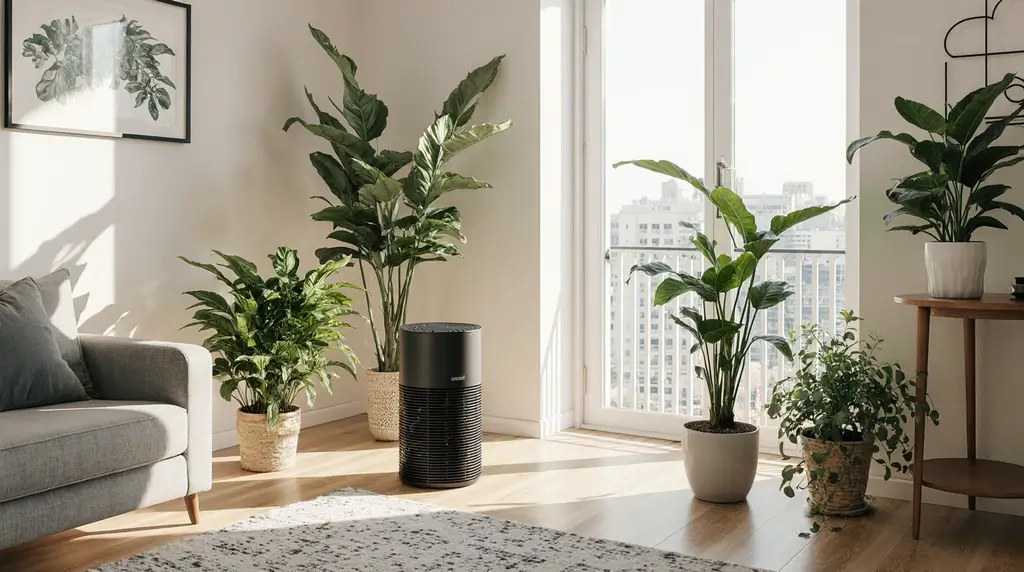
Here’s what actually works: reduce the source of pollution when possible, ventilate properly, and use a good indoor air Quality purifier to catch what’s left. You need all three. Just running a purifier with your windows closed while you cook on a gas stove isn’t going to cut it.
The Best Air Purifiers Right Now
Lab testing shows huge differences between models. These are the ones that consistently perform well. For more decorating ideas, explore our guide to DIY Indoor Herb Garden for Fresh Cooking.
Top Overall Performers
Blueair Blue Pure 311i Max
CNET calls this the best overall, and it’s easy to see why. It cleared 90% of test smoke in 1 minute and 28 seconds. More importantly, it’s quiet—just under 35 decibels on the low setting, which is about as loud as a whisper. That makes it livable in a bedroom.
Levoit Core 600S
Live Science picked this one for excellent cleaning performance plus smart features. The three-stage HEPA system removes 99.9% of 0.3-micron particles, and you can control it from your phone. Good balance of performance and convenience.
For Large Spaces
Coway Airmega 400s
This thing is fast. On high, it cleared 90% of particles in 21 seconds during testing. It’s rated for spaces up to 3,100 square feet, so if you have an open floor plan or want to cover multiple rooms, this is a solid choice.
AirDoctor AD3500
Built for commercial spaces and very large rooms. The UltraHEPA filter catches particles down to 0.003 microns (which is overkill for most people, but impressive). Covers up to 1,260 square feet.
Specialized Needs
Most Efficient: Shark Large Air Purifier HP232
Uses only 11.5 kWh per month, which translates to maybe $1.50 in electricity. If you’re running a purifier 24/7—and you probably should be—those costs add up. This one keeps them minimal while still performing well.
For Pet Owners: Levoit Vital 200S
Has a dedicated Pet Mode and a washable pre-filter that catches fur and dander before it clogs the main filter. That extends the life of your expensive HEPA filter significantly.
For Odors: Blueair Blue Signature
Uses enzyme-based OdorFence technology to actually break down smell molecules, not just mask them. If you cook a lot, have pets, or just hate stale air, this is worth considering.
For Allergens and Smoke: Windmill 3-in-1
Fastest at clearing fine particles—90% gone in 1 minute and 7 seconds. Great during wildfire season or if you’re sensitive to pollen and other allergens.
What the Specs Actually Mean
Don’t just buy based on price or looks. These numbers matter.
CADR (Clean Air Delivery Rate)
Measured in cubic feet per minute. Higher is better. As a general rule, the CADR should be at least two-thirds of your room’s square footage. So for a 300-square-foot bedroom, look for a CADR around 200.
T90 Time
This is how long it takes to clear 90% of particles from a test chamber. Real-world performance indicator. Faster is obviously better, but also consider noise levels at that speed.
Noise Levels
Measured in decibels (dBA). A whisper is about 25 dBA. Normal conversation is 60-70 dBA. If you’re putting this in a bedroom, stay under 40 dBA on the setting you’ll actually use at night.
Energy Use
Given that these should run constantly, energy consumption matters. The difference between an efficient model and a power hog can be $50+ per year. Check monthly kWh ratings.
Getting the Most Out of Your Air Purifier
Buying the right model is half the battle. Placement and maintenance matter just as much.
Where to Put It
Central location in the room works best. Keep it a few inches away from walls so air can circulate. Some experts suggest elevating it 5-6 feet off the ground for better air circulation, though floor placement usually works fine.
Bedrooms are ideal because you’re breathing that air for 7-8 hours straight. If you can only afford one unit, start there.
When to Open Windows
Sounds counterintuitive, but sometimes outdoor air is cleaner than indoor air. On nice days with low pollen and no nearby traffic, open your windows. Fresh air exchange helps.
Close them tight during wildfire season, high pollen days, or if you live on a busy street.
Maintenance Schedule
Change filters every 6-12 months depending on use. Most modern units have indicator lights, so you don’t have to guess.
Keep vacuuming and dusting. Sounds obvious, but these activities stir up settled particles that your purifier can then catch. A dirty house means a harder-working (and less effective) air purifier.
The Mental Health Connection
Clean air doesn’t just help your lungs. It affects your brain too.
People in homes with better air quality report better focus, improved mood, and higher-quality sleep. The research on this is solid. Poor air quality correlates with higher stress and anxiety levels.
If you work from home or have kids doing schoolwork, this isn’t trivial. Brain fog from poor air quality is real.
Your bedroom matters most here. Keep the temperature between 60-67°F, minimize light and noise, and run an air purifier. You’ll likely notice the difference in how you feel when you wake up.
Think of It Like This
Your air purifier is basically an immune system for your house.
The HEPA filter acts like white blood cells, catching the physical invaders—dust, pollen, dander, smoke particles—before they cause problems. The carbon filter is more like your liver, processing the chemical threats that the HEPA filter can’t touch—formaldehyde, VOCs, cooking gases.
But just like your body’s immune system, it needs support to work properly. You have to maintain it (change filters), keep the environment clean (vacuum regularly), and not overwhelm it (control pollution sources when possible).
Skip the maintenance, and the whole system breaks down.
What to Do Next
Start by figuring out your main concerns. Pets? Get something with a good pre-filter and carbon filtration. Allergies? HEPA is essential. Cook with gas frequently? Focus on ventilation first, then add a purifier with strong VOC filtration. A similar Home Improvement idea that many readers loved is our post about Smart Home Upgrades for Energy Efficiency. If storage is a challenge, our guide to Basement Makeovers: Transform Storage Into Living Space easy might inspire you.
If you’re serious about this, consider getting professional testing. Companies that specialize in indoor air quality can measure actual pollutant levels in your home. It’s not cheap, but it takes the guesswork out of which improvements matter most for your specific situation.
And remember—this isn’t one and done. Air quality is ongoing. Regular filter changes, consistent cleaning habits, and smart ventilation decisions all work together.
The payoff is real, though. Better breathing, clearer thinking, more energy, better sleep. Those six pollutants we talked about earlier? They’re affecting you right now. The good news is you can actually do something about it.
How can I tell if my indoor air quality is poor?
You might notice things like frequent dust buildup, stale smells, headaches, or irritation in your eyes and throat. These signs don’t always mean something serious, but they’re good indicators to check ventilation and possible pollution sources. A simple indoor air monitor can also give you quick feedback.